Destinations4 min read
What Is Overlanding?
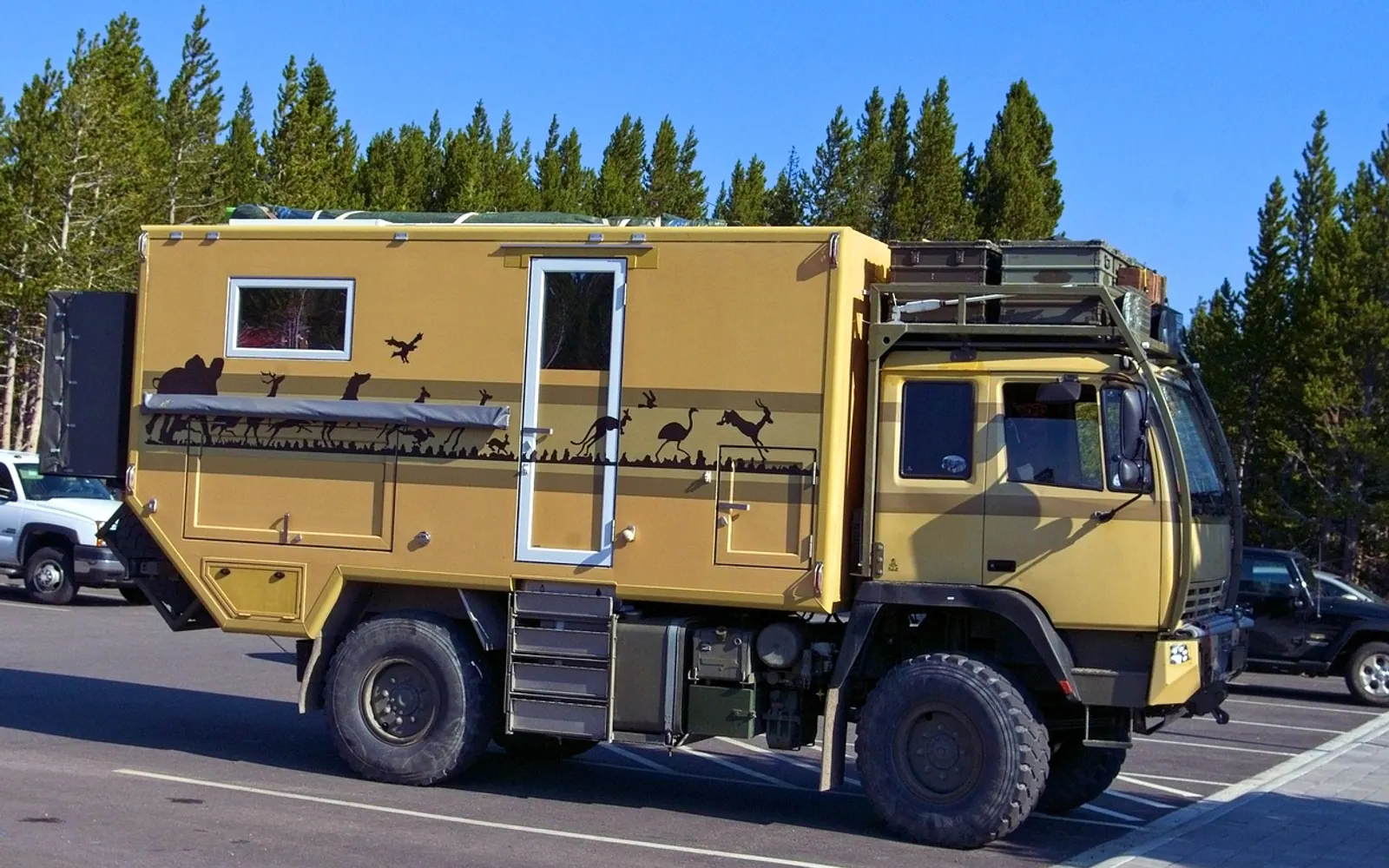
Overlanding is self-reliant travel by vehicle to remote places, where the journey itself is the point. You carry your shelter, water, food and tools with you, sleep in or beside the vehicle, and follow back roads and tracks for days or weeks at a time. It can be done in a four-wheel-drive truck, a van, an ordinary estate car on gravel roads, or on a motorcycle.
The word comes from long-distance journeys over land, and it still carries that sense of distance. A weekend loop through a national forest counts, though, as long as the idea is the same: travel slowly, camp simply, rely on what you brought.
Overlanding, car camping and off-roading
| Overlanding | Car camping | Off-roading | |
|---|---|---|---|
| Main aim | The route and the days on it | A base to relax or explore from | Driving difficult terrain |
| Where you sleep | A new spot most nights, often undeveloped | Usually one campground pitch | Often back home the same day |
| Facilities | Whatever you carry | Toilets, taps, sometimes showers | Not relevant |
| Typical length | Days to months | A night to a week | Hours |
The lines blur. Plenty of people start with car camping at a campground, add a night somewhere wilder, and realise a few trips later that they have been overlanding for a while.
What you need for a first trip
A vehicle you trust
Reliability matters more than modifications. A well-maintained standard vehicle with good tyres, a full-size spare and a recent service will cover most graded dirt roads. Know its ground clearance and do not let a route talk you into more than it can handle.
Somewhere to sleep
A ground tent is the cheapest answer and works perfectly well. Rooftop tents, sleeping platforms in the back and small trailers add comfort at a cost. Whatever you choose, practise setting it up in the dark.
Water, food and a way to cook
Carry more water than you expect to use, in sturdy containers, plus a stove, one or two pots and simple food. A cast-iron pot earns its weight when the vehicle is doing the carrying, and our collection of dutch oven camping recipes is built for exactly that. The rest of the kitchen and sleep kit follows the usual camping packing list.
Recovery and repair basics
- A shovel and traction boards or mats
- A tyre repair kit, a pump and a pressure gauge
- A tow strap and rated shackles, and the knowledge of where your vehicle's recovery points are
- Basic tools, spare fuses, tape and cable ties
- A first-aid kit and a fire extinguisher
Navigation that works without signal
Download offline maps before leaving and carry paper maps of the area as a backup. Being able to read the land from contour lines is a real advantage on unsigned tracks, and our guide on how to read a topographic map explains the basics.
Where you can go and sleep
In the United States, much overlanding happens on public land, where camping outside developed campgrounds is often allowed within stay limits. That practice is known as dispersed camping, and its rules apply to vehicle travellers as much as to anyone else. Elsewhere, access depends on national law and local custom; our overview of the right to roam shows how much that varies, and those rights almost never extend to driving off established roads.
Wherever you are, check with the land manager which roads are open to vehicles, whether permits are needed and whether fire restrictions are in force.
Rules of the track
- Stay on existing roads and tracks. Driving around a puddle or across open ground widens the damage for years.
- Camp on durable, previously used spots, well away from water.
- Pack out every bit of rubbish, including food scraps, and deal with human waste properly.
- Slow down near other camps, walkers, riders and livestock, and leave gates as you found them.
- Keep noise down. Loud accessories belong on private land and at organised events, a point the responsible-use section of our piece on train horn kits for trucks makes as well.
Staying safe
Travel with a second vehicle when you can, especially on remote or technical routes. Leave your plan and return date with someone at home. Check the weather and road conditions before setting off, because a dry track can become impassable after rain. Carry enough fuel to turn back from the furthest point, and know your limits: turning round is a normal part of a good trip.
Questions people ask
Do you need a four-wheel drive?
Not to begin. Many scenic back roads suit a careful driver in a two-wheel-drive car. Four-wheel drive and extra clearance widen the choice of routes and add a margin when conditions change.
Is overlanding expensive?
It can be as cheap or as costly as you make it. Fuel and food are the unavoidable costs; most of the equipment in glossy photos is optional.
How is it different from a road trip?
A road trip usually links towns and sights by paved road, with beds booked along the way. Overlanding swaps the bookings for self-sufficiency and the tarmac for quieter routes.
Editor’s picks
 MoviesWhy IPTV Continues to Gain Ground Across France3 min read
 MoviesIPTV in the Netherlands: Enhancing Entertainment with Innovation and Convenience3 min read
 Guides & TipsCamping in the Rain: How to Stay Dry and Enjoy It4 min read
 ActivitiesA Fresh Start: The Benefits of End of Lease Cleaning in Melbourne3 min read
Through the years
2026
2025
- The IVG Pro: Design, Consistency, and Convenience for Adult Vapers
- From Site to Sorting: How Container Services Streamline Construction Projects in Germany
- Photo Booth Hire That People Actually Use: How It Turns Moments Into Shared Stories
- Gentle Tributes, Delivered: Ordering a Funeral Bouquet From an Online Flower Shop
- Silicon and Soil: Champagne’s Quiet Tech Upgrade
2024
- Why UK-Based SEO Agencies Are Leading the Way in Digital Marketing Excellence
- From Education to Entertainment: How AI Is Reshaping Learning and Leisure
- How Automation and AI Are Revolutionizing Google Ads Campaigns
- Space-Saving Illumination: How Recessed Lighting Enhances Small Rooms
- Crafting Comfort: Customizable Options for Retractable Awnings