Food4 min read
Dutch Oven Camping Recipes and Campfire Desserts
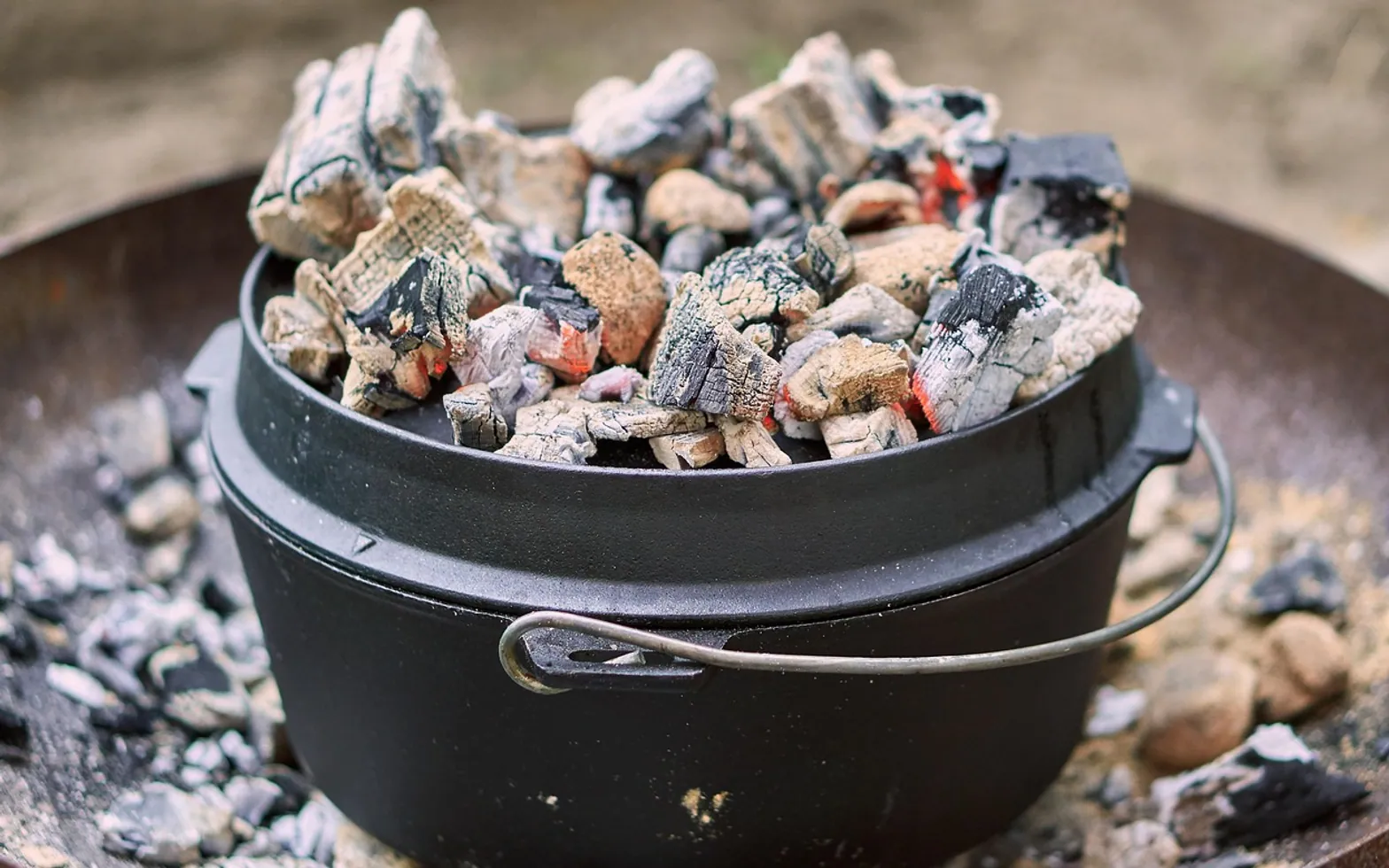
A camp dutch oven is a heavy cast-iron pot with a flat, rimmed lid, and it can stew, roast, fry and bake over a bed of coals. The method behind every recipe is the same: cook on embers, not flames, and put coals on the lid as well as underneath whenever you want oven-style heat. Once that is clear, chilli, bread and fruit cobbler are all within reach of a first-timer.
Choosing a pot
Camp models have three short legs, which hold the base above the coals, and a lid with a raised rim that keeps embers from sliding off. A wire handle lets you lift the pot with a hook. Flat-bottomed kitchen versions work on a grate or stove but are awkward for baking. A mid-sized pot feeds four to six people; cast iron is heavy, so this is equipment for trips where a vehicle does the carrying.
Managing the heat
- Let the fire burn down to glowing coals, or use charcoal briquettes for steadier heat.
- Simmering and stewing: most of the heat underneath.
- Baking: more coals on the lid than below, so the top browns before the base burns.
- Roasting: roughly even, top and bottom.
- Turn the pot a quarter turn one way and the lid a quarter turn the other every ten to fifteen minutes to even out hot spots.
- Lift the lid as little as possible, and tip it away from you so ash does not fall in.
Check local fire rules before lighting anything, and set the oven up in an established fire ring or on bare mineral ground. The basics are in our guide to building a campfire safely.
Six recipes to start with
1. One-pot breakfast bake
Brown sausage or bacon pieces in the pot, add diced cooked potatoes, then pour over beaten eggs and scatter with cheese. Cover, put coals on the lid and cook until the eggs are fully set. Vegetarians can swap the meat for peppers, onions and mushrooms.
2. Camp chilli
Soften onion and garlic, brown minced beef or add extra beans for a meat-free version, then stir in tinned tomatoes, kidney beans, chilli powder and cumin. Simmer with the lid on, stirring now and then, until thick. It tastes better the longer it sits at the edge of the heat.
3. Chicken and vegetable stew
Brown chicken thighs, then add carrots, potatoes, onion, stock and herbs. Simmer until the vegetables are tender and the chicken is cooked through with no pink remaining. Leftovers reheat well for lunch.
4. Spiced one-pot rice
Fry onion with tomato paste and your chosen spice blend, stir in rinsed rice, add stock and tinned tomatoes, cover tightly and cook on low heat without lifting the lid until the rice has absorbed the liquid. West African jollof is the best-known dish of this kind, and our piece on stocking a cupboard with the seasonings behind dishes like jollof covers the ingredients that give it its character.
5. No-knead camp bread
Mix flour, salt, a little yeast and water at home or the night before and leave the dough to rise slowly. Shape it, drop it into a preheated, lightly oiled pot, and bake with plenty of coals on the lid until the loaf is browned and sounds hollow when tapped.
6. Fruit cobbler
Tip tinned or fresh fruit into the pot, cover with a simple batter or a dry cake mix dotted with butter, and bake with most of the heat on top until golden and bubbling at the edges. Peach, cherry and apple all work.
Campfire desserts without the pot
| Dessert | How it is made |
|---|---|
| S'mores | A toasted marshmallow and a square of chocolate between two biscuits |
| Baked apples | Cored apples filled with sugar, cinnamon and raisins, wrapped in foil and set in the embers |
| Campfire cones | Ice-cream cones filled with fruit, chocolate and marshmallows, wrapped in foil and warmed |
| Grilled peaches | Halved peaches placed cut side down on a grate until soft |
| Twist bread | Dough wound around a clean stick and turned over coals until cooked through |
Food safety at camp
Keep raw meat cold until it goes in the pot, use separate utensils for raw and cooked food, and cook poultry and minced meat thoroughly. Do not leave cooked food sitting out for hours; eat it, chill it or bin it. Wash hands before handling food, even when water is limited.
Looking after cast iron
- Let the pot cool, then scrape out food with a wooden or plastic scraper.
- Rinse with hot water. A little soap does no harm to a well-seasoned pot, but avoid soaking it.
- Dry it straight away over the remaining heat.
- Wipe a thin film of cooking oil over the inside while it is still warm.
- Store with the lid slightly ajar so moisture cannot build up.
Scatter strained washing-up water well away from streams and pack out all food scraps.
Where to go next
For trips where every gram counts, or days when nobody wants to tend coals, our list of easy camping meals sticks to one light pan and food prepared at home. The cooking kit for both approaches is itemised in the camping packing list, and vehicle-based travellers will find more on carrying a kitchen in our explainer on overlanding.
Editor’s picks
 MoviesWhy IPTV Continues to Gain Ground Across France3 min read
 MoviesIPTV in the Netherlands: Enhancing Entertainment with Innovation and Convenience3 min read
 Guides & TipsCamping in the Rain: How to Stay Dry and Enjoy It4 min read
 ActivitiesA Fresh Start: The Benefits of End of Lease Cleaning in Melbourne3 min read
Through the years
2026
2025
- The IVG Pro: Design, Consistency, and Convenience for Adult Vapers
- From Site to Sorting: How Container Services Streamline Construction Projects in Germany
- Photo Booth Hire That People Actually Use: How It Turns Moments Into Shared Stories
- Gentle Tributes, Delivered: Ordering a Funeral Bouquet From an Online Flower Shop
- Silicon and Soil: Champagne’s Quiet Tech Upgrade
2024
- Why UK-Based SEO Agencies Are Leading the Way in Digital Marketing Excellence
- From Education to Entertainment: How AI Is Reshaping Learning and Leisure
- How Automation and AI Are Revolutionizing Google Ads Campaigns
- Space-Saving Illumination: How Recessed Lighting Enhances Small Rooms
- Crafting Comfort: Customizable Options for Retractable Awnings