Guides & Tips4 min read
Camping in the Rain: How to Stay Dry and Enjoy It
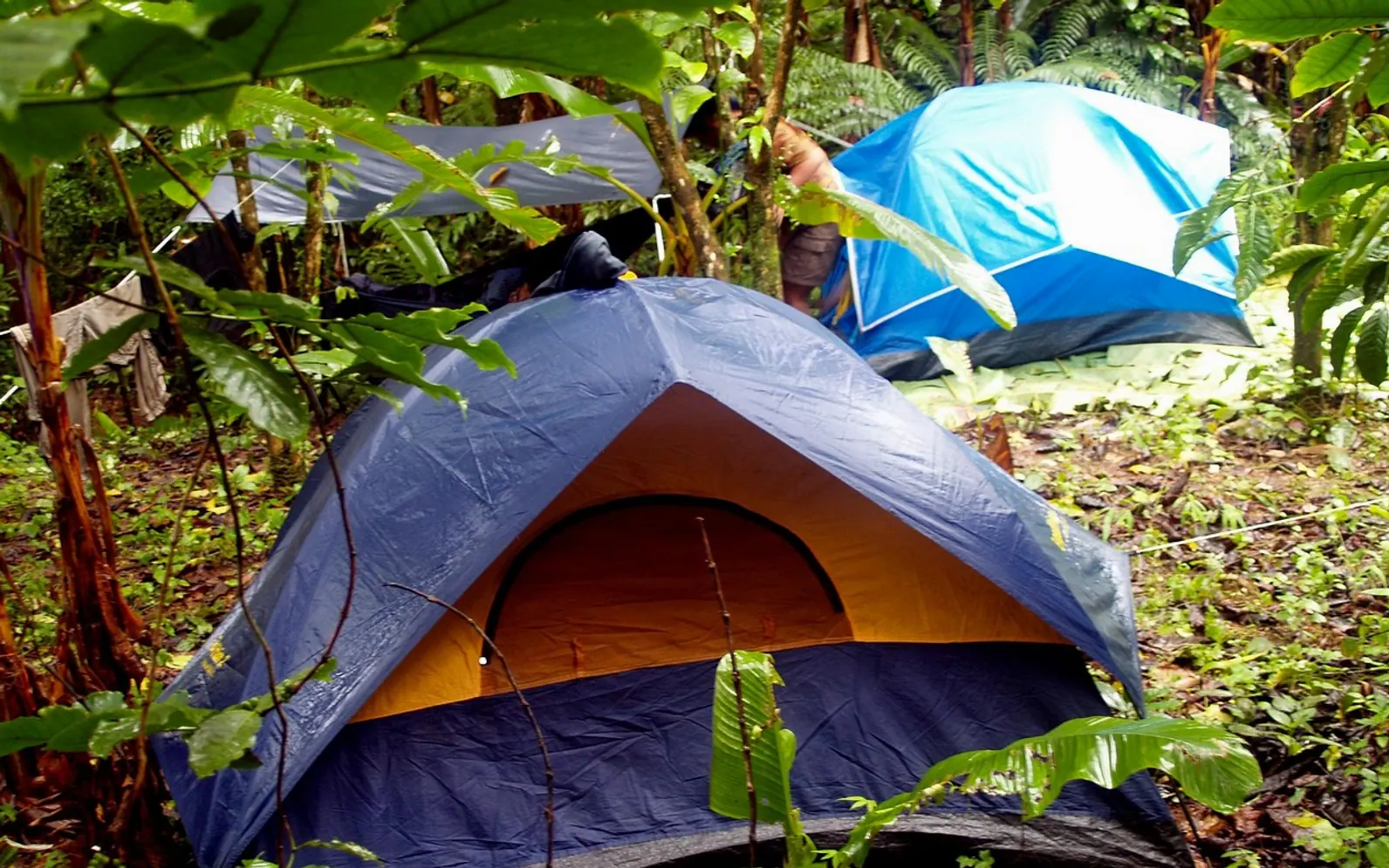
Camping in the rain comes down to three habits: keep one set of clothes and your sleeping kit dry no matter what, give yourself a covered space outside the tent, and manage the moisture you bring in with you. Get those right and a wet weekend becomes a slower, quieter kind of trip instead of a retreat to the car.
Before you leave
- Check the forecast for the exact area, including wind. Steady rain is manageable; storms, flooding and lightning are reasons to postpone.
- Line your rucksack or bags with a heavy-duty liner and pack clothes and sleeping bag inside it.
- Add a tarp, extra cord and a few spare pegs to the usual camping kit.
- Bring a small towel or sponge reserved for wiping the tent floor.
- Pack one full set of dry clothes that is only ever worn inside the tent.
Choosing the pitch
Water runs downhill and collects in hollows, so avoid the lowest ground and anywhere that looks like a dry channel. Slightly raised, well-drained ground is ideal. Stay off river banks, which can rise quickly, and avoid camping directly under large trees: they keep dripping long after the rain stops, and old branches can fall in wind.
Turn the tent so the door faces away from the wind. If your tent lets the flysheet go up first or together with the inner, use that method. The full sequence is in our guide on how to pitch a tent.
Rig a tarp first
A tarp is the single most useful item in wet weather. Put it up before the tent and you have a dry place to stand, sort gear and cook. String a ridgeline between two trees or poles, drape the tarp over it and peg the corners out, keeping one edge lower so that water runs off away from where you sit. Check that it sheds water rather than pooling in the middle.
Keeping the inside dry
- Tuck the groundsheet or footprint fully under the tent so it cannot funnel water beneath the floor.
- Take wet jackets and boots off in the porch and leave them there.
- Keep everything away from the tent walls; fabric pressed against a wet flysheet lets water through.
- Open the vents. Breath and damp clothes create condensation, and a closed-up tent can end up wetter inside than out.
- Retighten the guylines in the evening, because wet fabric sags.
Clothing that copes
Wear a waterproof jacket and overtrousers, with layers underneath that still insulate when damp, such as wool or synthetic fleece. Cotton holds water and chills quickly. Change into the dry set as soon as you are in for the night, and put the damp clothes back on in the morning if more rain is coming. It is unpleasant for two minutes and keeps the dry set dry.
Sleeping warm
A dry sleeping bag is the line between a good night and a miserable one. Keep it in its liner until bedtime. Synthetic fill tolerates damp better than down, a point covered in our guide to choosing a sleeping bag. An insulated mat matters even more on cold, wet ground.
Cooking and eating
Cook under the tarp or in the open, never inside a closed tent or porch: stoves produce carbon monoxide and tents burn fast. Choose meals that need one pot and little attention, and keep a flask of something hot filled. Wet wood makes fires hard work, so plan around the stove.
Passing the time
Rain shrinks the campsite to the size of the tarp, which is no bad thing. A deck of cards weighs almost nothing, and our round-up of card games for a crowd has several that work in a tight space. Books, a downloaded film and a short walk in full waterproofs fill the rest of the day.
How to clean a tent afterwards
A tent packed wet will grow mildew within days, so deal with it as soon as you are home.
- Pitch it or hang it somewhere airy until every part is completely dry, including seams and the underside of the floor.
- Shake out grit and brush off dried mud.
- Sponge marks with cool water and a little mild, non-detergent soap. Do not machine wash or tumble dry.
- Rinse the pegs and dry the poles.
- Store everything loosely in a dry place out of direct sunlight.
If water has stopped beading on the flysheet, a spray-on reproofing treatment made for tents can restore it; follow the maker's instructions and apply seam sealer to any seams that leaked. Gear that spends the off-season in a garage or storage unit benefits from labelled boxes, the same idea as the box index in our piece on planning a spell in storage between two homes.
When to call it off
Leave, or move to shelter, if there is lightning nearby, if water is rising around the pitch, if strong winds are bringing down branches, or if someone is shivering and cannot get warm. Persistent shivering, confusion and clumsiness are warning signs of dangerous cold and call for dry clothes, warmth and medical help. No trip is worth pushing through those.
For a low-stakes rehearsal, try a damp night at home first; our guide to backyard camping explains how to set one up.
Editor’s picks
 MoviesWhy IPTV Continues to Gain Ground Across France3 min read
 MoviesIPTV in the Netherlands: Enhancing Entertainment with Innovation and Convenience3 min read
- Guides & TipsCamping in the Rain: How to Stay Dry and Enjoy It4 min read
 ActivitiesA Fresh Start: The Benefits of End of Lease Cleaning in Melbourne3 min read
Through the years
2026
2025
- The IVG Pro: Design, Consistency, and Convenience for Adult Vapers
- From Site to Sorting: How Container Services Streamline Construction Projects in Germany
- Photo Booth Hire That People Actually Use: How It Turns Moments Into Shared Stories
- Gentle Tributes, Delivered: Ordering a Funeral Bouquet From an Online Flower Shop
- Silicon and Soil: Champagne’s Quiet Tech Upgrade
2024
- Why UK-Based SEO Agencies Are Leading the Way in Digital Marketing Excellence
- From Education to Entertainment: How AI Is Reshaping Learning and Leisure
- How Automation and AI Are Revolutionizing Google Ads Campaigns
- Space-Saving Illumination: How Recessed Lighting Enhances Small Rooms
- Crafting Comfort: Customizable Options for Retractable Awnings