Games5 min read
Campfire Games for Every Kind of Group
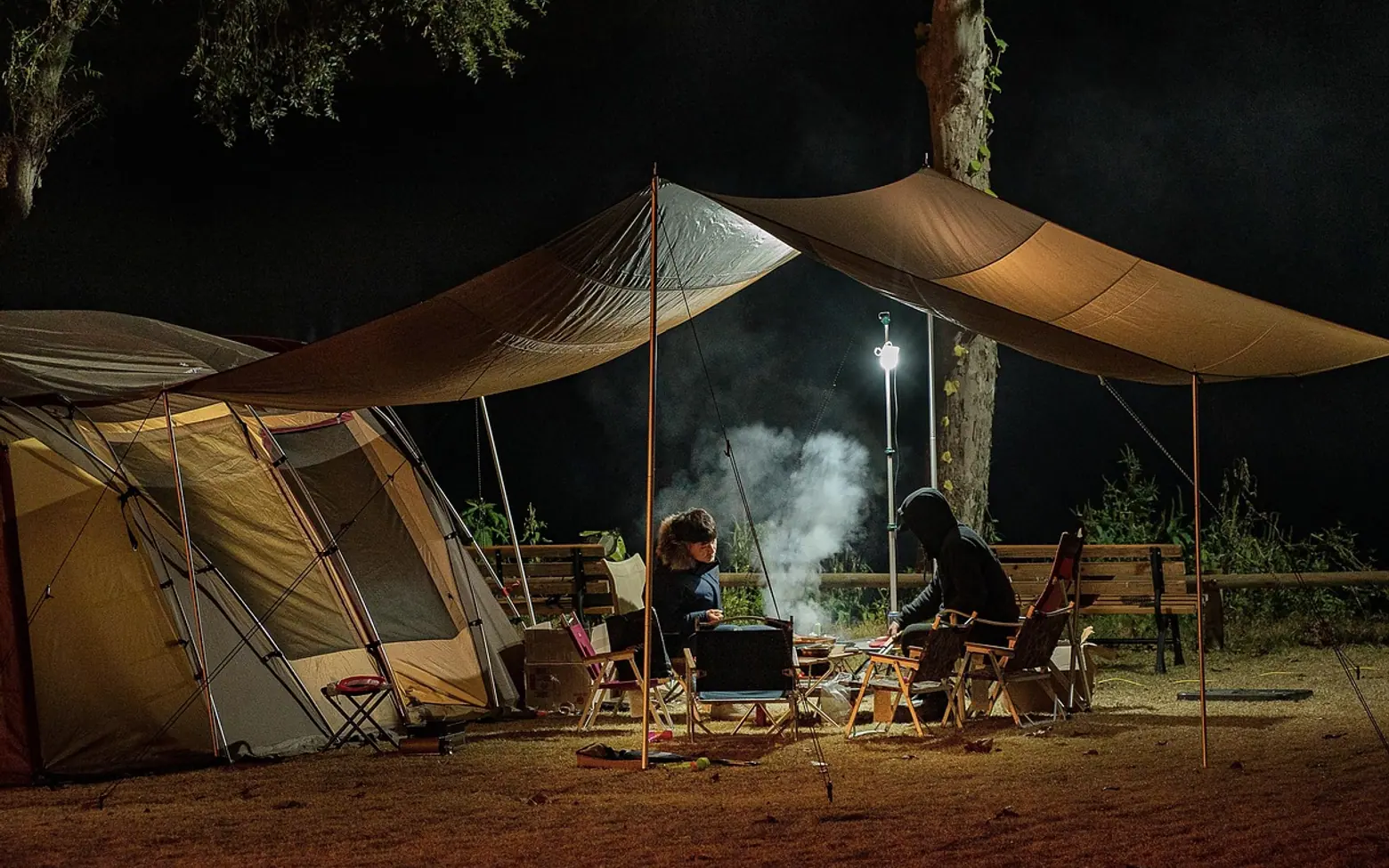
The best campfire games are the ones you can play sitting down, in low light, with nothing more than voices and a bit of imagination. Story chains, guessing games, word games and quiet hidden-role rounds all fit that brief, and most of them work just as well for a family with young children as for a group of friends who met at the hostel that morning.
Below you will find ideas sorted by type, a quick comparison table and a few ground rules that keep the evening relaxed and the fire where it belongs.
What makes a game work by the fire
A game that shines at a kitchen table can fall flat outdoors. Before suggesting anything, run it past a short checklist:
- Seated play. Nobody should need to run, chase or throw anything near the flames.
- Little or no light needed. Cards and boards are hard to read by firelight; spoken games are not.
- Flexible numbers. People drift off to fetch jumpers or add a log, so the game should survive a player leaving mid-round.
- Quick to explain. If the rules take longer than a minute, the moment has usually passed.
- Easy to pause. When the coals are perfect for marshmallows, the game should stop without arguments.
Storytelling games
One-word story
Go round the circle, each person adding a single word to a shared sentence. The results swerve wildly, which is the point. For older groups, switch to one sentence each and set a theme such as "the night the tent blew away".
Fortunately, unfortunately
The first player opens a story with a line that begins "Fortunately…". The next must continue with "Unfortunately…", and the tale keeps flipping between good and bad luck. It builds suspense on its own and suits children who are new to making up stories.
The object in the middle
Someone places a random item from their pack in the centre: a spoon, a compass, a single odd sock. Each person invents a short history for it. The most outlandish backstory wins nothing but applause.
Spooky tales are a fireside tradition, but read the circle. Keep them gentle for younger listeners, and agree beforehand that anyone can ask for a lighter ending.
Guessing games
- Twenty Questions. One player thinks of a person, place or thing; the rest ask yes-or-no questions and have twenty chances to name it.
- Who am I? Each player is secretly given a famous name, whispered by a neighbour, and asks questions until they work out who they are.
- Two truths and a lie. Everyone shares three statements about themselves, and the group guesses which one is invented. It is a natural icebreaker when the circle includes new faces.
- Animal sounds. One person imitates a creature that might live nearby; the others guess. Younger campers love it, and it often sparks talk about the local wildlife.
Word and memory games
The packing game is tailor-made for a camping trip. The first player says "I went camping and I brought…" followed by an item beginning with A. The next repeats the list and adds something starting with B. Anyone who forgets an item drops out, and the last one standing earns first pick of the toasting sticks.
Categories is another easy option: choose a topic, such as rivers, breakfast foods or film titles, and go round naming one example each without repeats or long pauses. Word association works the same way, with each player saying the first word the previous one brings to mind.
Camping games for adults
Once the children are asleep, groups often want something with a little more bite.
- Would you rather. Pose two awkward choices and make everyone defend their answer. Keep the questions friendly enough that no one feels cornered.
- Werewolf or Mafia. A narrator secretly assigns roles. At "night" everyone closes their eyes while the hidden villains pick a victim; by "day" the group debates whom to accuse. Firelight and the rustle of the dark add plenty of atmosphere.
- Hot seat. One person takes the seat facing the group and answers three questions, with the right to pass once.
Quiet games for winding down
As the fire burns low, switch to calmer ideas. In sound map, everyone sits silently for one minute, then lists every sound they noticed: an owl, a zip, a distant car. On a clear night, invent constellations together, naming shapes in the stars and the stories behind them. Humming a tune for others to guess also suits the late hour.
Quick comparison
| Game | Best for | Gear | Energy level |
|---|---|---|---|
| One-word story | All ages | None | Lively |
| Fortunately, unfortunately | Kids and families | None | Medium |
| Twenty Questions | Any group size | None | Calm |
| Packing memory game | Mixed ages | None | Medium |
| Werewolf / Mafia | Teens and adults, seven or more | Optional cards for roles | Lively |
| Sound map | Winding down | None | Very calm |
Keeping it safe
Games are part of the fun, but the fire still needs attention. Mark a clear zone around the ring where nobody stands or plays, keep younger children seated, and ask one adult to keep an eye on the flames while everyone else is distracted. A bucket of water or sand within reach is essential. The guide on how to build a campfire safely covers fire bans, fire lays and putting it out cold before bed.
A head torch with a red-light setting helps when you need to step away from the circle without dazzling everyone. Add one to your camping packing list if it is not there already.
Frequently asked questions
What games can you play around a campfire with no equipment?
Almost every game above needs nothing at all. Story chains, Twenty Questions, two truths and a lie, categories, the packing game and sound map are played with voices only.
How can teenagers be drawn into campfire games?
Give them ownership. Let a teenager narrate Werewolf or set the theme for the story round, and they will often end up leading the evening.
What if it rains?
Move under a tarp or into a roomy tent (never with a flame inside) and bring out a deck of cards. Our round-up of card games for large groups has plenty that work in a tight space.
Editor’s picks
 MoviesWhy IPTV Continues to Gain Ground Across France2 min read
 MoviesIPTV in the Netherlands: Enhancing Entertainment with Innovation and Convenience2 min read
 ActivitiesA Fresh Start: The Benefits of End of Lease Cleaning in Melbourne3 min read
 GamesMinecraft, Still Popular in 2025? Why the Answer Is Yes2 min read
Through the years
2026
2025
- The IVG Pro: Design, Consistency, and Convenience for Adult Vapers
- From Site to Sorting: How Container Services Streamline Construction Projects in Germany
- Photo Booth Hire That People Actually Use: How It Turns Moments Into Shared Stories
- Gentle Tributes, Delivered: Ordering a Funeral Bouquet From an Online Flower Shop
- Silicon and Soil: Champagne’s Quiet Tech Upgrade
2024
- Why UK-Based SEO Agencies Are Leading the Way in Digital Marketing Excellence
- From Education to Entertainment: How AI Is Reshaping Learning and Leisure
- How Automation and AI Are Revolutionizing Google Ads Campaigns
- Space-Saving Illumination: How Recessed Lighting Enhances Small Rooms
- Crafting Comfort: Customizable Options for Retractable Awnings